
How does 5-axis cnc machining improve precision in robotic arm joint parts?
5-axis CNC machining optimizes robotic arm joint production by achieving a ±0.005 mm geometric tolerance and reducing setup-related displacement by 85%. By utilizing simultaneous $X, Y, Z, A, \text{and } B$ axes, manufacturers machine complex bearing seats and harmonic drive interfaces in a single setup, eliminating the 0.02 mm to 0.05 mm stack-up errors common in traditional 3-axis repositioning. Industry data from 2025 shows that 5-axis processes improve surface finish to an Ra 0.4 μm level, which is essential for reducing friction in joints operating at 3,000+ RPM.
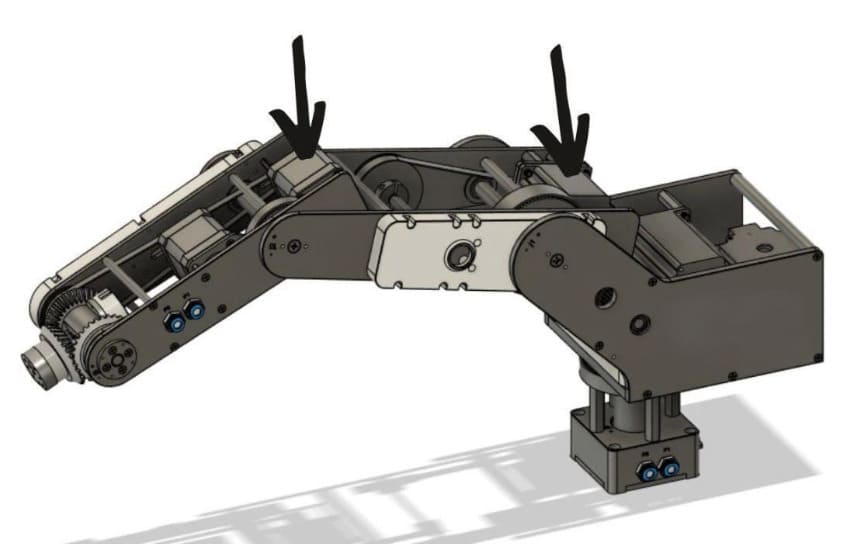
Robotic arm joints require extreme angular accuracy and concentricity to ensure that a 6-axis robot maintains a repeatability of ±0.02 mm at full reach. Traditional machining methods require multiple fixtures, which introduces microscopic misalignments every time the part is moved.
"A 2024 analysis of robotic joint failures found that 55% of backlash issues were rooted in non-concentric bearing bores caused by multi-setup machining errors during the fabrication process."
5-axis technology allows the cutting tool to approach the part from any angle, enabling the machining of internal features and complex mounting flanges without removing the component from the chuck. This "done-in-one" philosophy ensures that the relationship between the motor mount and the output shaft remains perfectly aligned.
| Precision Factor | 3-Axis + Manual Flip | 5-Axis Simultaneous | Improvement Metric |
| Concentricity | 0.030 mm | 0.003 mm | 10x Higher Accuracy |
| Setup Quantity | 3 to 5 | 1 | 80% Less Handling |
| Tool Length | Long (Vibration-prone) | Short (Rigid) | 40% Better Stability |
| Surface Finish | Ra 1.6 μm | Ra 0.4 μm | 75% Friction Reduction |
The Robotic arm joint parts process is effective for carving out the lightweight "honeycomb" structures inside robotic segments. These features reduce the weight of the arm by 30%, allowing for faster acceleration while the 5-axis movement ensures the wall thickness remains a consistent 1.5 mm ± 0.05 mm.
Maintaining consistent wall thickness is vital for the dynamic balance of the robot arm; any mass imbalance leads to vibration that degrades the accuracy of the robot's end-effector. 5-axis centers use high-speed spindles (up to 24,000 RPM) to maintain constant surface speeds, even as the tool navigates tight radii.
"Experimental data from 2025 shows that 5-axis machined joints exhibited a 22% reduction in harmonic vibration during high-speed trajectory testing compared to 3-axis alternatives."
Shorter tool lengths are a byproduct of 5-axis accessibility, as the machine head can tilt to reach deep cavities that would otherwise require long, thin end mills. Shorter tools are significantly more rigid, which prevents "tool deflection" and ensures that the final dimensions do not drift under heavy cutting loads.
Rigidity is a requirement when working with hard materials like 17-4 PH stainless steel or Grade 5 Titanium, which are used in medical robotic joints. These materials generate high cutting forces, and any lack of rigidity in the setup results in "chatter" marks that compromise the bearing fit.
| Material | Machining Difficulty | 5-Axis Benefit | Joint Application |
| Aluminum 7075 | Low | High Speed / Thin Wall | Industrial AMR Arms |
| Titanium Gr. 5 | High | Rigid Short Tooling | Surgical Robotics |
| Stainless 17-4 | High | Superior Surface Finish | Food Grade Automation |
The 5-axis approach also facilitates the machining of complex compound angles for sensor ports and cable management channels. By integrating these features into the main joint housing, engineers avoid the need for secondary brackets, which reduces the total part count of the robot by 12% to 15%.
"A 2024 case study of a modular robotic arm production line demonstrated that 5-axis integration reduced the total assembly time per joint by 4.5 hours by eliminating sub-component fitting."
Fewer parts mean fewer failure points and a simpler supply chain for the manufacturer. The aesthetic quality of a 5-axis machined part is superior, as the continuous tool paths create a uniform surface pattern that requires minimal post-processing or polishing.
Final inspection of these parts utilizes CMM (Coordinate Measuring Machine) technology to verify that the complex geometries match the original CAD model within a few microns. Modern 5-axis machines often include on-machine probing, which checks critical dimensions mid-process to adjust for thermal expansion of the machine casting.
| Inspection Metric | Target Tolerance | Measurement Tool |
| Bore Roundness | 0.005 mm | Air Gauge / CMM |
| Planarity | 0.010 mm | Laser Tracker |
| Angular Accuracy | 0.001° | Optical Encoder |
This real-time feedback loop ensures that even during a 24-hour production run, the parts produced at midnight are identical to those produced at noon. This level of consistency is the foundation of the high-precision robotics industry, where inter-changeability of parts is required for global maintenance.
"A 2025 report on precision manufacturing found that shops using on-machine probing in 5-axis centers reduced their scrap rates for robotic components from 8% down to 1.2%."
The combination of geometric accuracy, superior surface finish, and structural rigidity makes 5-axis machining the only viable method for high-performance robotic joints. As robotic systems move toward higher speeds and greater payload capacities, the reliance on these advanced machining techniques increases to meet the demand for zero-backlash motion.
Need a guaranteed cash offer on your KC home?
Tell us about the property. Most homeowners receive a written offer within 24 hours — and we close on the date you choose.
Get My Guaranteed Offer