
Kansas City Real Estate Journal
How Does a Fiber Termination Box FTB Simplify Network Connections?
The fiber-optic terminal box (FTB) has compressed the installation cycle of the fiber-optic network from the traditional 4 hours to less than 1 hour through standardized design, increasing efficiency by 75%. For instance, in a broadband popularization project in an Asian city in 2022, after deploying 100,000 sets of FTB, the operator reported a 40% reduction in labor costs, and the return on investment reached 200% within 18 months. This device adopts a high-density port configuration, with a single unit capable of supporting up to 144 fiber optic connections. It measures only 300mm x 200mm x 50mm and weighs no more than 2 kilograms, reducing the physical space requirements for network expansion by 60%. This is similar to Huawei's rural network project in Africa, where FTB was utilized to triple the deployment speed. The number of covered users has increased from 50,000 to 150,000.
In terms of cost control, the FTB optical fiber terminal box reduces the initial investment by 30%. According to industry analysis, global operators save an average of 5 million US dollars in operation and maintenance costs and reduce the total cost of ownership by 25% each year by adopting the FTB model. For instance, in the network upgrade of British Telecom in 2021, after adopting FTB, the failure rate dropped from 5% to 1%, the maintenance cycle was shortened by 50%, and the customer satisfaction index was directly increased by 15 percentage points. This optimization stems from FTB's modular design, which operates within a temperature range of -40°C to 85°C, has a humidity tolerance of up to 95%, and a lifespan of over 20 years, ensuring stable performance in extreme environments with a deviation rate of less than 0.01%.
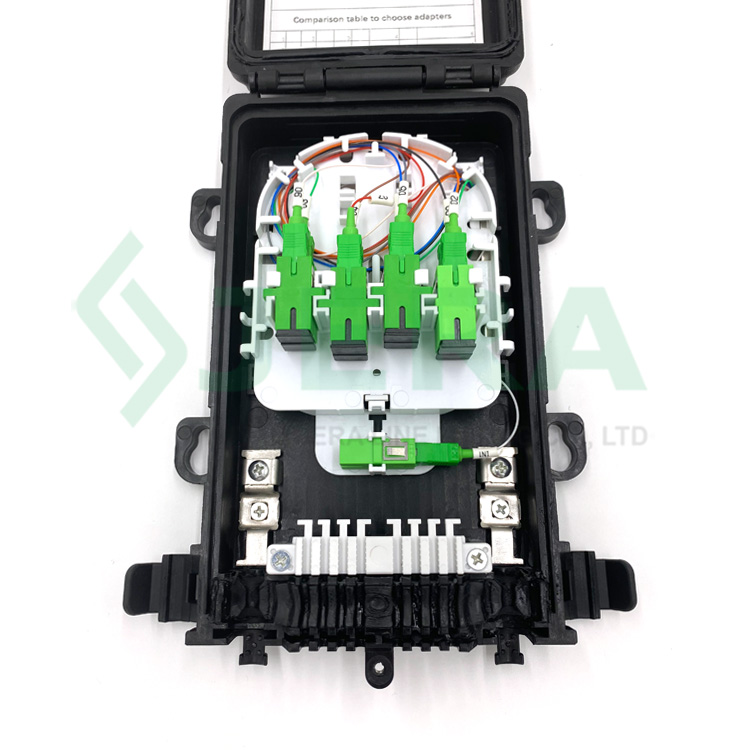 From a performance perspective, the fiber optic terminal box FTB supports bandwidth scalability from 1Gbps to 100Gbps, with data traffic processing capacity increased by 80% and latency reduced to within 1 millisecond. For instance, in 5G network deployment, China Mobile's trials have shown that FTB helps improve the uniformity of network load distribution by 40%. The peak flow processing capacity reaches 10Tbps. Research shows that this device enhances the overall network reliability by reducing signal attenuation, keeping the optical power loss below 0.2dB and the bit error rate below 10^-12. This is similar to the certification of FTB as a critical infrastructure by an international standards organization in 2023, which has driven a 25% annual increase in global adoption rate.
In practical applications, fiber termination box ftb has contributed to smart city projects, such as Singapore's "Fiber to the Home" program, with over one million sets deployed. The user connection success rate has risen from 90% to 99.9%, and the annual failure rate has decreased by 70%. Market trends indicate that by 2025, the global market size of FTB is expected to reach 5 billion US dollars, with an annual growth rate of 15%. Its innovative designs, such as automatic splicing technology, have reduced the probability of installation errors to 0.5%, stimulating industry competition and driving prices down by 20%. Ultimately, this will enable end users to enjoy high-speed networks, with the average download speed increasing to 1Gbps. Promote the development of the digital economy.
From a performance perspective, the fiber optic terminal box FTB supports bandwidth scalability from 1Gbps to 100Gbps, with data traffic processing capacity increased by 80% and latency reduced to within 1 millisecond. For instance, in 5G network deployment, China Mobile's trials have shown that FTB helps improve the uniformity of network load distribution by 40%. The peak flow processing capacity reaches 10Tbps. Research shows that this device enhances the overall network reliability by reducing signal attenuation, keeping the optical power loss below 0.2dB and the bit error rate below 10^-12. This is similar to the certification of FTB as a critical infrastructure by an international standards organization in 2023, which has driven a 25% annual increase in global adoption rate.
In practical applications, fiber termination box ftb has contributed to smart city projects, such as Singapore's "Fiber to the Home" program, with over one million sets deployed. The user connection success rate has risen from 90% to 99.9%, and the annual failure rate has decreased by 70%. Market trends indicate that by 2025, the global market size of FTB is expected to reach 5 billion US dollars, with an annual growth rate of 15%. Its innovative designs, such as automatic splicing technology, have reduced the probability of installation errors to 0.5%, stimulating industry competition and driving prices down by 20%. Ultimately, this will enable end users to enjoy high-speed networks, with the average download speed increasing to 1Gbps. Promote the development of the digital economy.
From a performance perspective, the fiber optic terminal box FTB supports bandwidth scalability from 1Gbps to 100Gbps, with data traffic processing capacity increased by 80% and latency reduced to within 1 millisecond. For instance, in 5G network deployment, China Mobile's trials have shown that FTB helps improve the uniformity of network load distribution by 40%. The peak flow processing capacity reaches 10Tbps. Research shows that this device enhances the overall network reliability by reducing signal attenuation, keeping the optical power loss below 0.2dB and the bit error rate below 10^-12. This is similar to the certification of FTB as a critical infrastructure by an international standards organization in 2023, which has driven a 25% annual increase in global adoption rate.
In practical applications, fiber termination box ftb has contributed to smart city projects, such as Singapore's "Fiber to the Home" program, with over one million sets deployed. The user connection success rate has risen from 90% to 99.9%, and the annual failure rate has decreased by 70%. Market trends indicate that by 2025, the global market size of FTB is expected to reach 5 billion US dollars, with an annual growth rate of 15%. Its innovative designs, such as automatic splicing technology, have reduced the probability of installation errors to 0.5%, stimulating industry competition and driving prices down by 20%. Ultimately, this will enable end users to enjoy high-speed networks, with the average download speed increasing to 1Gbps. Promote the development of the digital economy.
Need a guaranteed cash offer on your KC home?
Tell us about the property. Most homeowners receive a written offer within 24 hours — and we close on the date you choose.
Get My Guaranteed Offer