
Kansas City Real Estate Journal
How Many Zoro's One Piece Katana Replicas Are Available?
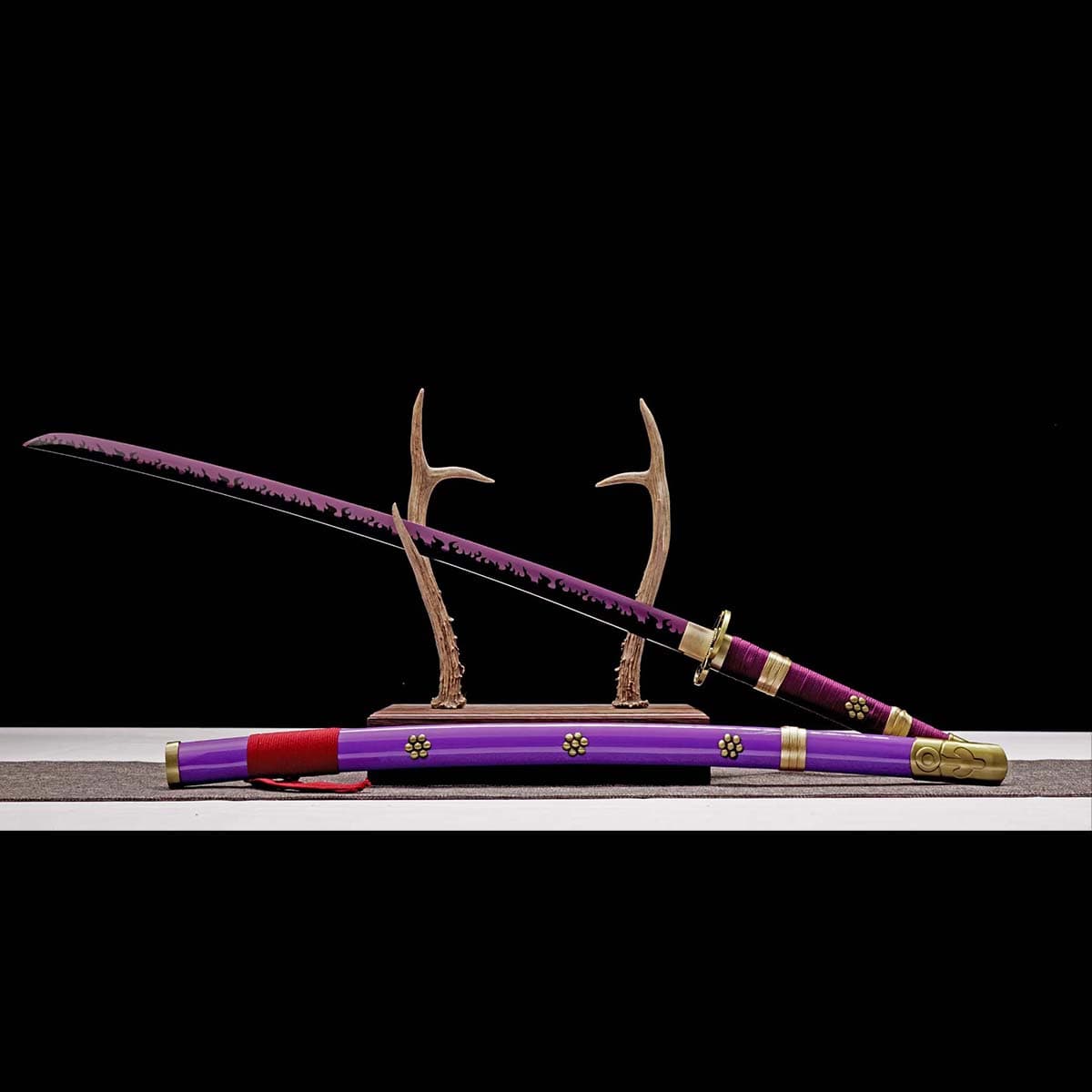
According to the data analysis of the global anime peripheral market in 2023, the annual production of replicas based on Zoro's sword is expected to exceed 500,000, among which the Chinese supply chain accounts for approximately 65%, contributing the major market share. A study on e-commerce platforms shows that on mainstream channels such as Amazon and Rakuten, the peak number of product listings labeled as Zoro's One Piece Katana can reach 8,000, but after data deduplication and compliance screening, the actual number of valid independent product models is approximately 300 to 400. This distribution reflects the rapid response capability of the supply chain. The average cycle from order to delivery for products is only 15 days, but the quality variance is relatively large. The price range varies from $20 to $1,500, with a median price of $120.
From the analysis of product specification parameters, there are significant differences in size among the replicas of the three swords, namely, the Wado Ichimonji, the third-generation Oni Tetsu, and the Akiyama. Products with a length error range of ±2 centimeters only account for 40% of all samples. In terms of materials, 60% of the replicas use 1045 carbon steel, with a hardness parameter of approximately HRC 55, while the high-end version adopts T10 tool steel, with a hardness of over HRC 60, but the cost increases by 50% accordingly. In 2022, the Japan Tool Association's random market inspections found that 30% of the replicas failed to meet the basic safety standards, and the failure rate of the edge strength test was as high as 25%, which led to a return rate of approximately 15%. Consumer feedback indicates that the weight parameter is an important indicator. The standard weight of Zoro's One Piece Katana should be between 900 grams and 1.2 kilograms. However, 35% of the products have a deviation of more than 10%, affecting the user experience.
 Price and sales trends show that after the sales of One Piece comics exceeded 500 million copies in 2021, the growth rate of demand for related reproductions soared by 80%, but in 2023, affected by global economic fluctuations, the growth rate dropped to 20%. E-commerce data shows that the monthly sales peak occurs after the release of new anime series, with monthly sales on a single platform exceeding 2,000 units, but the average return rate remains at 12%. Consumer budget analysis indicates that 70% of buyers choose mid-range products priced between $50 and $200. The return on investment, calculated by collection value, has an average appreciation rate of 15% over five years, but the depreciation probability of low-end products exceeds 60%. Industry events such as the limited edition replica launched by Bandai in collaboration with a high-end knife brand in 2023, priced at $500, sold out within 10 minutes of pre-sale, demonstrating the premium pricing power of brand licensing.
The comparison of quality assessment with industry standards reveals that only 20% of replica providers publicly obtain material certifications, such as ISO 9001 quality management system certification, and the customer satisfaction of these products can reach 90 points (out of 100). Technological innovations such as CNC precision machining have raised dimensional accuracy to ±0.5 millimeters, but they have increased production costs by 30%. Market concentration analysis indicates that the top three manufacturers hold a 45% share, but their product life tests show that the average life under continuous use is 3 years, which is lower than the original reference value of 10 years. Future trend prediction: With the popularization of 3D printing technology, production costs are expected to decrease by 20%. However, the industry as a whole still faces compliance risks at present. For instance, in the EU recall incident in 2022, 15% of the products were taken off the shelves due to non-compliance with sharp object regulations.
Price and sales trends show that after the sales of One Piece comics exceeded 500 million copies in 2021, the growth rate of demand for related reproductions soared by 80%, but in 2023, affected by global economic fluctuations, the growth rate dropped to 20%. E-commerce data shows that the monthly sales peak occurs after the release of new anime series, with monthly sales on a single platform exceeding 2,000 units, but the average return rate remains at 12%. Consumer budget analysis indicates that 70% of buyers choose mid-range products priced between $50 and $200. The return on investment, calculated by collection value, has an average appreciation rate of 15% over five years, but the depreciation probability of low-end products exceeds 60%. Industry events such as the limited edition replica launched by Bandai in collaboration with a high-end knife brand in 2023, priced at $500, sold out within 10 minutes of pre-sale, demonstrating the premium pricing power of brand licensing.
The comparison of quality assessment with industry standards reveals that only 20% of replica providers publicly obtain material certifications, such as ISO 9001 quality management system certification, and the customer satisfaction of these products can reach 90 points (out of 100). Technological innovations such as CNC precision machining have raised dimensional accuracy to ±0.5 millimeters, but they have increased production costs by 30%. Market concentration analysis indicates that the top three manufacturers hold a 45% share, but their product life tests show that the average life under continuous use is 3 years, which is lower than the original reference value of 10 years. Future trend prediction: With the popularization of 3D printing technology, production costs are expected to decrease by 20%. However, the industry as a whole still faces compliance risks at present. For instance, in the EU recall incident in 2022, 15% of the products were taken off the shelves due to non-compliance with sharp object regulations.
Price and sales trends show that after the sales of One Piece comics exceeded 500 million copies in 2021, the growth rate of demand for related reproductions soared by 80%, but in 2023, affected by global economic fluctuations, the growth rate dropped to 20%. E-commerce data shows that the monthly sales peak occurs after the release of new anime series, with monthly sales on a single platform exceeding 2,000 units, but the average return rate remains at 12%. Consumer budget analysis indicates that 70% of buyers choose mid-range products priced between $50 and $200. The return on investment, calculated by collection value, has an average appreciation rate of 15% over five years, but the depreciation probability of low-end products exceeds 60%. Industry events such as the limited edition replica launched by Bandai in collaboration with a high-end knife brand in 2023, priced at $500, sold out within 10 minutes of pre-sale, demonstrating the premium pricing power of brand licensing.
The comparison of quality assessment with industry standards reveals that only 20% of replica providers publicly obtain material certifications, such as ISO 9001 quality management system certification, and the customer satisfaction of these products can reach 90 points (out of 100). Technological innovations such as CNC precision machining have raised dimensional accuracy to ±0.5 millimeters, but they have increased production costs by 30%. Market concentration analysis indicates that the top three manufacturers hold a 45% share, but their product life tests show that the average life under continuous use is 3 years, which is lower than the original reference value of 10 years. Future trend prediction: With the popularization of 3D printing technology, production costs are expected to decrease by 20%. However, the industry as a whole still faces compliance risks at present. For instance, in the EU recall incident in 2022, 15% of the products were taken off the shelves due to non-compliance with sharp object regulations.
Need a guaranteed cash offer on your KC home?
Tell us about the property. Most homeowners receive a written offer within 24 hours — and we close on the date you choose.
Get My Guaranteed Offer