
Kansas City Real Estate Journal
Why is air conditioning for electrical cabinets necessary?
Electrical equipment generates a large amount of heat during operation. For instance, the power loss of a standard frequency conversion cabinet can reach 3% to 5% of its rated power, which means that a 100-kilowatt cabinet can produce over 3,000 kilocalories of heat per hour. Research shows that the failure rate of electronic components is highly correlated with the operating temperature. According to the Mil-Henderson model, when the ambient temperature exceeds the reference value of 40°C, for every 10°C increase in temperature, the failure rate of components doubles. A typical case is that in 2018, a European car manufacturing plant had its production line shut down for three hours due to overheating of the servo drive cabinet, resulting in a direct economic loss of up to 500,000 euros. Therefore, precise temperature control is crucial for maintaining the temperature inside the cabinet within the ideal range of 20°C to 25°C, which can extend the equipment's lifespan by at least 30%.
High temperature and high humidity are the two main causes of electrical faults. When the relative humidity exceeds 60%, the rate of circuit board corrosion will increase exponentially, while when the humidity is below 30%, the risk of static discharge will increase by 40%. A well-known industry incident occurred in 2021 when a semiconductor factory suffered from an imbalance in air pressure within the clean room, causing moist air to invade the control cabinets and resulting in a batch damage to the mainboards of precision controllers worth 2 million US dollars. The humidity fluctuation range reached 70% within 24 hours. The dedicated air conditioning for electrical cabinets can stably control the humidity within the golden range of 45% to 55%, with a dew point temperature accuracy of ±1.5°C, effectively preventing condensation and reducing such risk probability by more than 90%.
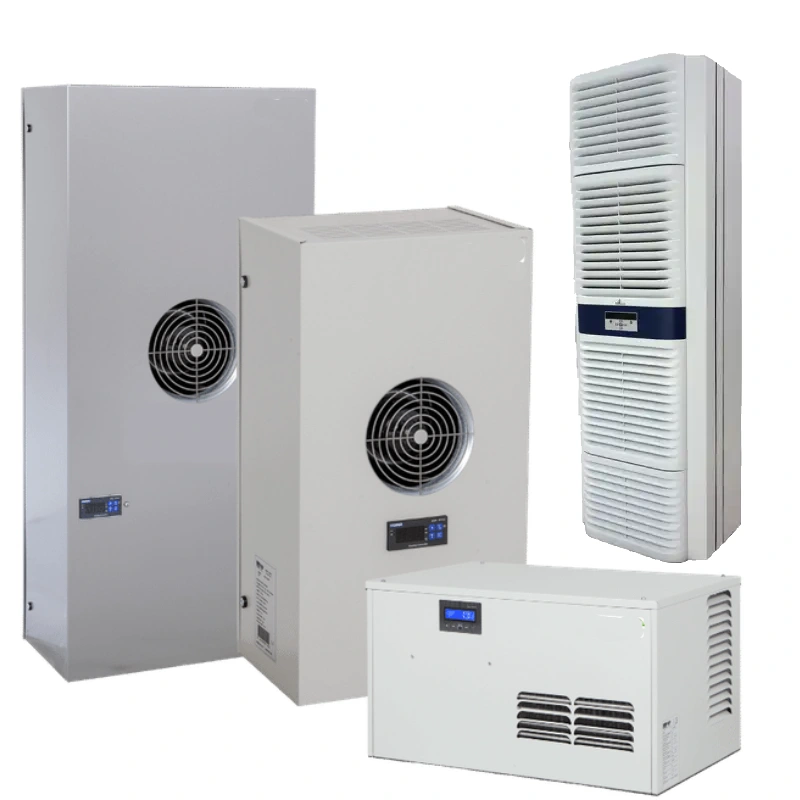 Dust and pollutants are another major threat. In industrial environments, the concentration of particulate matter in the air may exceed 150 micrograms per cubic meter. These pollutants accumulate inside equipment, which can reduce heat dissipation efficiency by 25% within six months and cause the temperature of local hotspots to be 15°C higher than the average temperature. Compared with using only ordinary filters, cabinet air conditioners equipped with IP54 protection grade and F7 high-efficiency filters can block over 99% of particles with a diameter greater than 0.3 microns. For instance, after a German steel plant installed a sealed air conditioning system in its rolling mill control cabinet, the maintenance cycle of the main circuit breaker was extended from three months to 12 months, and the annual maintenance cost was reduced by 40%.
From the perspective of return on investment, the initial cost of installing a dedicated air conditioning system may range from $2,000 to $8,000, accounting for approximately 1% to 5% of the total value of the protected equipment. However, the average cost of an unplanned downtime can be more than ten times the initial investment. Market analysis shows that the global industrial automation sector suffers an annual loss of over 10 billion US dollars due to overheating issues. By implementing an active thermal management strategy to keep the standard deviation of temperature fluctuations inside the cabinet within 2°C, enterprises can not only reduce the probability of unexpected downtime from an average of 5 times per year to 0.5 times, but also achieve a return on investment within 18 months by enhancing the overall efficiency of the equipment. This preventive measure is the core strategy to ensure the continuous and reliable operation of critical infrastructure.
Dust and pollutants are another major threat. In industrial environments, the concentration of particulate matter in the air may exceed 150 micrograms per cubic meter. These pollutants accumulate inside equipment, which can reduce heat dissipation efficiency by 25% within six months and cause the temperature of local hotspots to be 15°C higher than the average temperature. Compared with using only ordinary filters, cabinet air conditioners equipped with IP54 protection grade and F7 high-efficiency filters can block over 99% of particles with a diameter greater than 0.3 microns. For instance, after a German steel plant installed a sealed air conditioning system in its rolling mill control cabinet, the maintenance cycle of the main circuit breaker was extended from three months to 12 months, and the annual maintenance cost was reduced by 40%.
From the perspective of return on investment, the initial cost of installing a dedicated air conditioning system may range from $2,000 to $8,000, accounting for approximately 1% to 5% of the total value of the protected equipment. However, the average cost of an unplanned downtime can be more than ten times the initial investment. Market analysis shows that the global industrial automation sector suffers an annual loss of over 10 billion US dollars due to overheating issues. By implementing an active thermal management strategy to keep the standard deviation of temperature fluctuations inside the cabinet within 2°C, enterprises can not only reduce the probability of unexpected downtime from an average of 5 times per year to 0.5 times, but also achieve a return on investment within 18 months by enhancing the overall efficiency of the equipment. This preventive measure is the core strategy to ensure the continuous and reliable operation of critical infrastructure.
Dust and pollutants are another major threat. In industrial environments, the concentration of particulate matter in the air may exceed 150 micrograms per cubic meter. These pollutants accumulate inside equipment, which can reduce heat dissipation efficiency by 25% within six months and cause the temperature of local hotspots to be 15°C higher than the average temperature. Compared with using only ordinary filters, cabinet air conditioners equipped with IP54 protection grade and F7 high-efficiency filters can block over 99% of particles with a diameter greater than 0.3 microns. For instance, after a German steel plant installed a sealed air conditioning system in its rolling mill control cabinet, the maintenance cycle of the main circuit breaker was extended from three months to 12 months, and the annual maintenance cost was reduced by 40%.
From the perspective of return on investment, the initial cost of installing a dedicated air conditioning system may range from $2,000 to $8,000, accounting for approximately 1% to 5% of the total value of the protected equipment. However, the average cost of an unplanned downtime can be more than ten times the initial investment. Market analysis shows that the global industrial automation sector suffers an annual loss of over 10 billion US dollars due to overheating issues. By implementing an active thermal management strategy to keep the standard deviation of temperature fluctuations inside the cabinet within 2°C, enterprises can not only reduce the probability of unexpected downtime from an average of 5 times per year to 0.5 times, but also achieve a return on investment within 18 months by enhancing the overall efficiency of the equipment. This preventive measure is the core strategy to ensure the continuous and reliable operation of critical infrastructure.
Need a guaranteed cash offer on your KC home?
Tell us about the property. Most homeowners receive a written offer within 24 hours — and we close on the date you choose.
Get My Guaranteed Offer